
Dedicated dressing table or dual-use desk?
Choose by the tasks you need the surface to handle, not by the product label. A dedicated dressing table can keep grooming items in one place; a desk can share the same footprint with work. Compare the actual drawers, seated reach, mirror position and clearing-away routine before deciding.
Key Takeaways
- Keep the tabouret stored under the coiffeuse or in a nearby cupboard so the floor stays clear.
- Place the mirror to catch soft side daylight instead of facing a window directly.
- Choose drawers that open fully while you sit so daily items stay within easy reach.
- Compare the actual storage and change-of-task routine; a dedicated dressing table is not automatically more usable than a desk.
- Always record room dimensions, furniture layout and window orientation before asking for a project quotation.
What are you planning?
A coiffeuse is a dressing table, which may have an integrated or separate mirror and different storage arrangements. Start with the furniture and light already in your bedroom. This guide does not determine building or copropriété permissions for any alterations.
Planning Storage and Stool Integration Storage and stool placement need to let every drawer open fully while you sit and allow the tabouret to tuck away when not in use.
Put shallow drawers at the front for items you reach every day and deeper ones at the sides for less-used pieces. A lightweight tabouret that slides completely underneath avoids clutter in smaller French bedrooms. In houses with more floor area a separate low cabinet nearby can hold extra storage without cutting off daylight.
Think about how often you will sit there and check drawer reach with your chosen stool before the design is fixed.
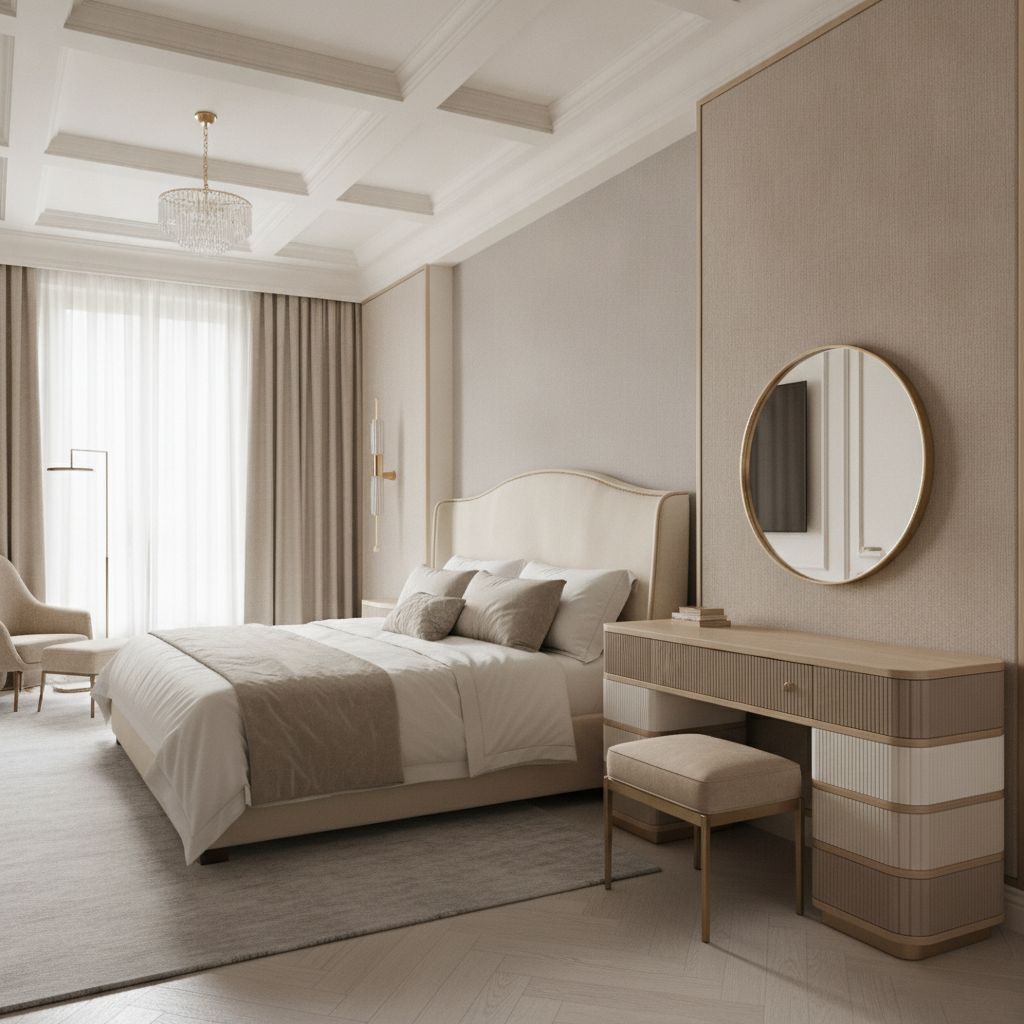
Mirror Position and Daylight Access The mirror works best when it receives soft natural light from the side or slightly ahead so you avoid both heavy shadows and direct glare.
In many Paris apartments windows look onto courtyards or streets. Setting the coiffeuse perpendicular to the window often gives even light across the face. Mirror placement should be tested in the actual room; it is not established by a generic building-rule statement. Test the spot at different times of day. A mirror that tilts a little lets you adjust to changing seasons without adding any electrical parts.
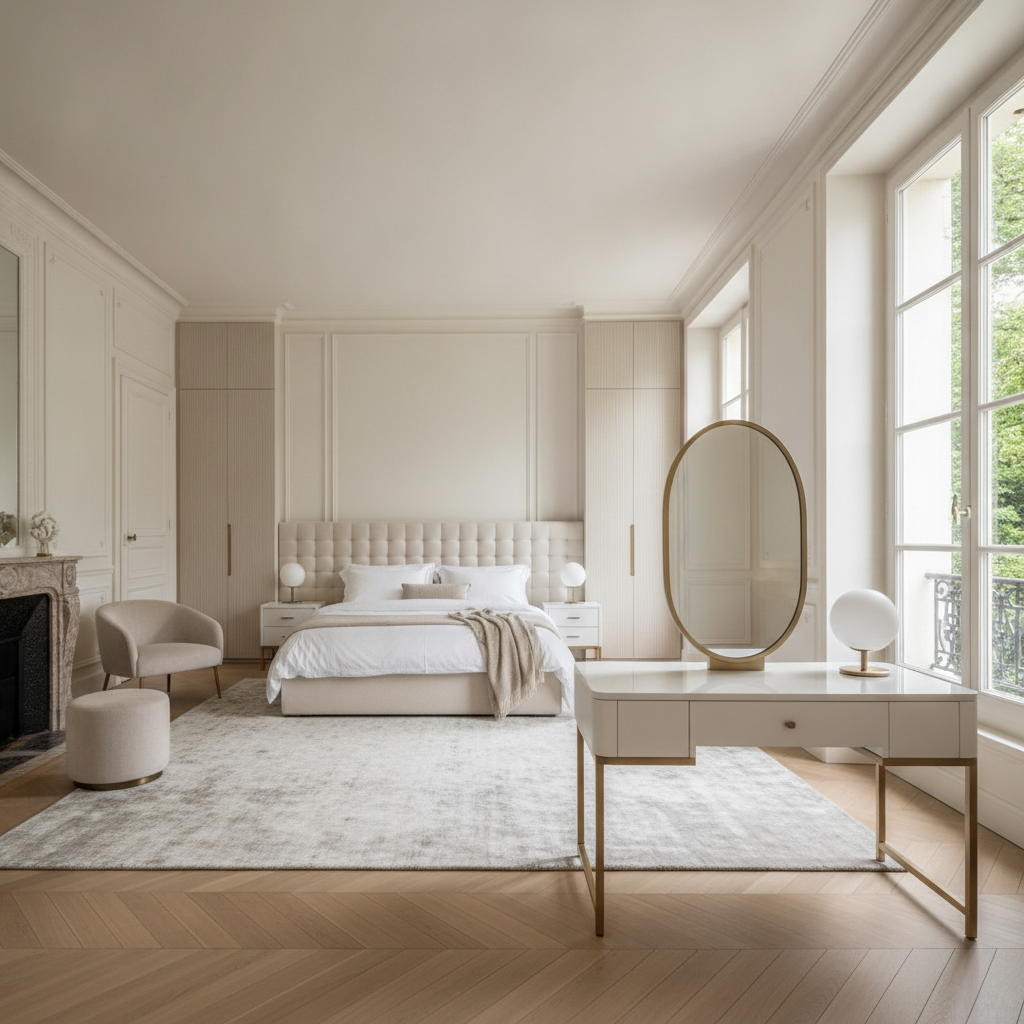
Dedicated Coiffeuse or Dual-Purpose Desk Choose a dedicated coiffeuse when organised storage and a fixed mirror matched to available daylight are the priority. A desk that also serves as a dressing table suits bedrooms where the same surface must handle a laptop by day and cosmetics by evening.
| Check | Dedicated dressing table | Dual-use desk |
|---|---|---|
| Storage | Confirm usable compartments and full drawer travel | Confirm usable compartments and full drawer travel |
| Mirror | Check the actual seated view and fixing instructions | Check mirror placement and where it goes during work |
| Stool or chair | Check stored and seated outlines | Check both grooming and work positions |
| Changing tasks | List what can stay on the surface | List what needs clearing and where it will be stored |
Pick according to how your household actually uses the bedroom.
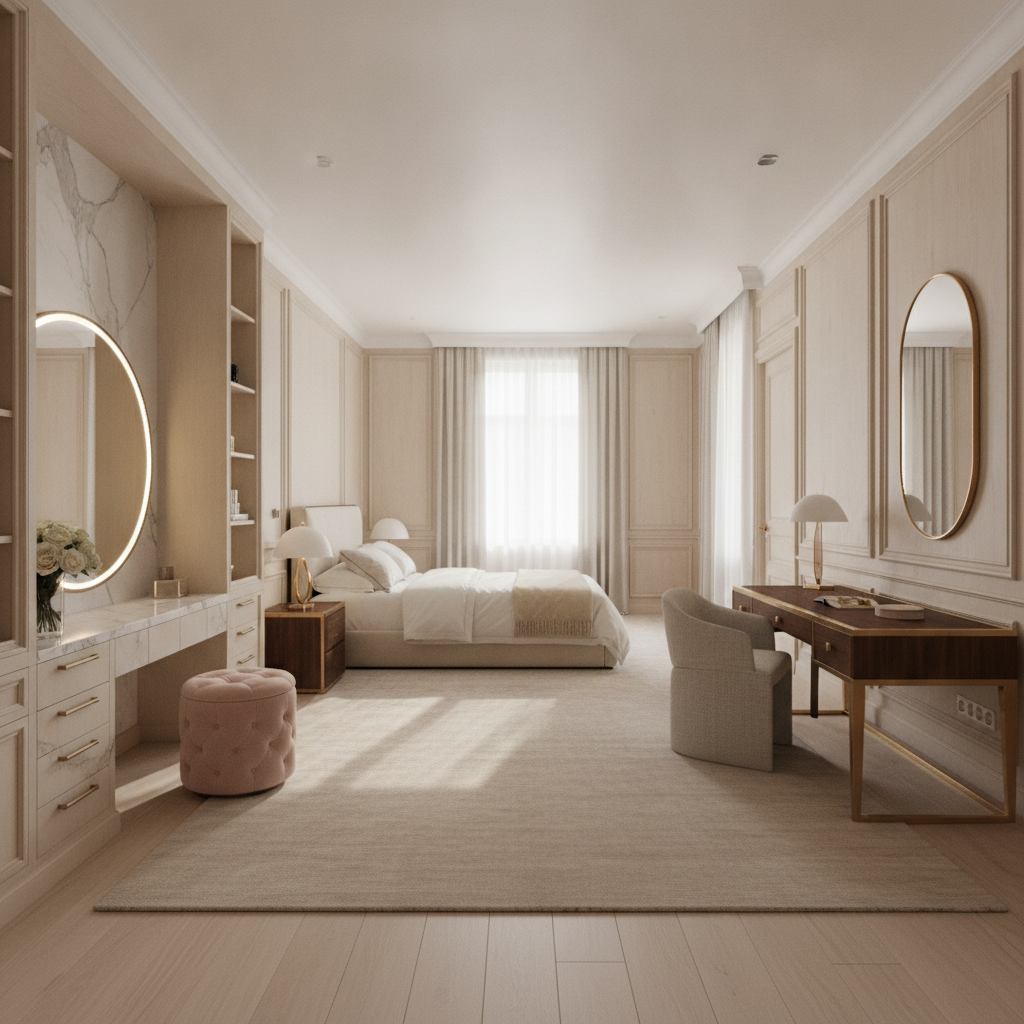
Choosing a Coiffeuse Adapted to Your French Bedroom List how you will use the piece and note the real limits of the room. Measure wall length, distance to the nearest window and floor-to-sill height.
Record the knee space depth you need and mark any skirting or radiators that could stop the stool from sliding underneath. In villas with high ceilings a taller mirror can feel right; in low-ceiling apartments a smaller scale stops the coiffeuse from taking over. Match materials to existing furniture so maintenance stays simple.
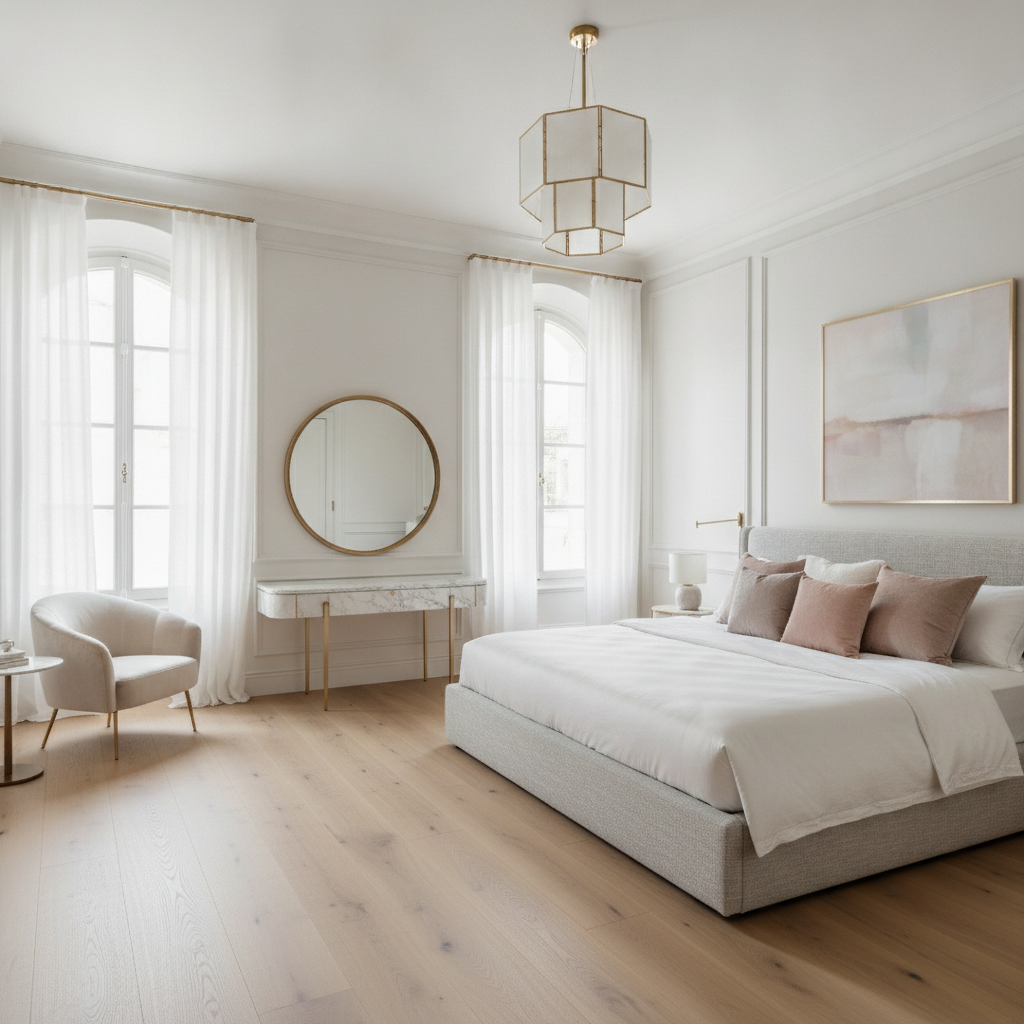
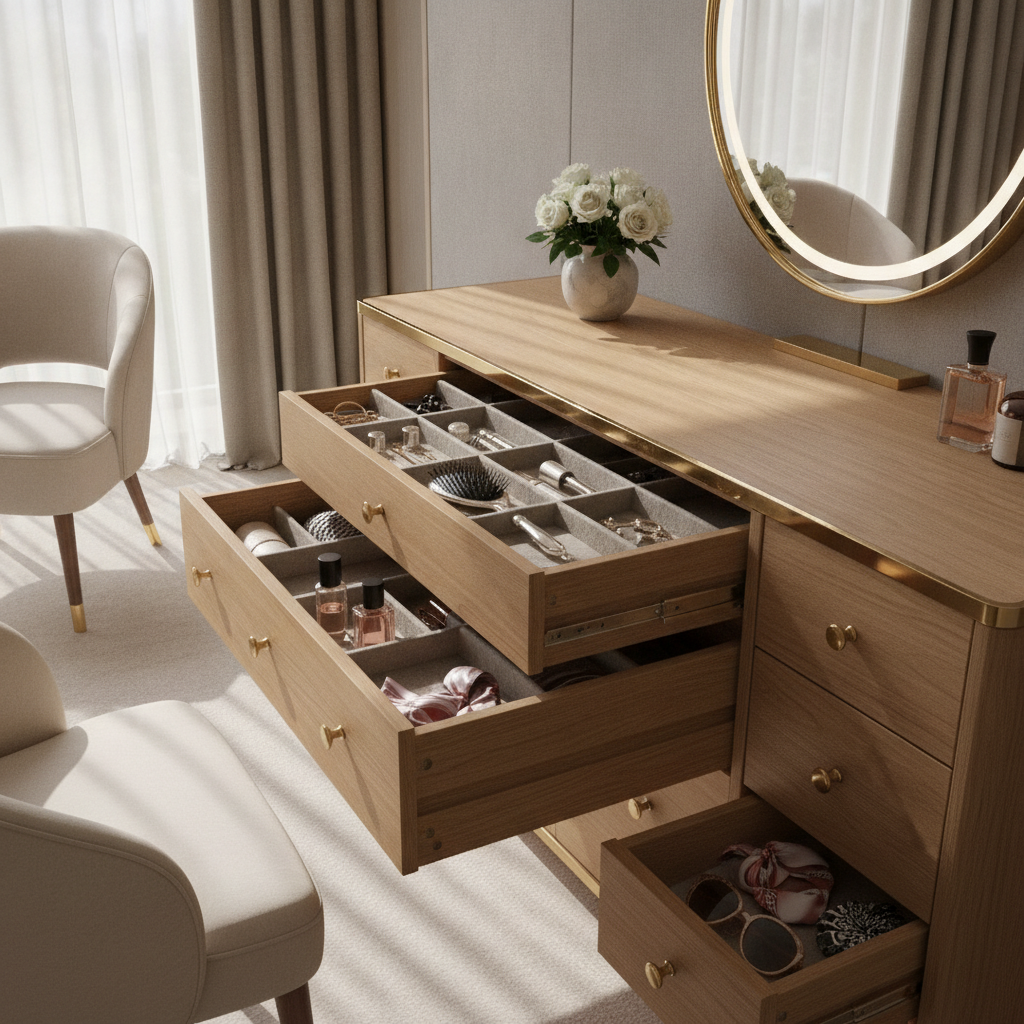
Solutions for Storage in a Coiffeuse Useful storage comes from drawer layouts that let you reach everything while seated.
Dividers inside drawers keep small items from disappearing at the back. A pull-out tray at seating height can hold a mirror or tray without using permanent surface space. Matching the coiffeuse finish to built-in wardrobes in open master suites creates a calmer look. Avoid drawers so deep that you cannot reach the back when the stool is pulled out.
FAQ
How much floor space should I allow?
Check the actual table, fully opened drawers and stool in both its stored and seated positions. Compare those outlines with doors and walking routes, and confirm any access requirements for the property and users. This article does not prescribe one universal clearance.
What measurements should be recorded before requesting a quotation? Note the length and depth of the chosen wall, window-to-wall distance, ceiling height, positions of existing furniture and preferred mirror direction. These let accurate plans for stool storage and drawer access be made.
Can a coiffeuse be added to smaller French bedrooms without custom work? Yes. Many compact urban flats fit a slim dedicated coiffeuse or a desk conversion once the layout is measured. Designs with integrated stool storage often solve tight spaces.
How does drawer access differ between the options?
Check each proposed model with the intended seat in position. Drawer depth and extension are not determined by whether the furniture is sold as a desk or dressing table.
How do I optimise mirror position for natural light in a French apartment? Set the mirror so daylight falls from the side instead of straight in front or behind. Check the angle at the time you normally use the coiffeuse and adjust the tilt if the design allows.
What should I send to Zorinia for a project quotation? Send clear photos of the bedroom that show the furniture layout and window orientation, exact metric dimensions of the available space, notes on preferred mirror direction and a list of your storage requirements. Zorinia designs and sources furniture and materials from partner factories in China and coordinates delivery. Zorinia can arrange measurement and separately quoted local-partner installation subject to project address and scope. Measurement or design fees may be credited toward procurement under the agreed quotation. Goods payment is 40 % deposit and 60 % before dispatch. Customs clearance and relevant import duties are handled in the agreed quotation. Lead times and commercial warranty are project-specific.